



Mobile Messaging Is Now a Records Problem for Every Industry
Federal regulators expect organizations to preserve text messages, chat apps, and ephemeral messaging alongside email. Here's what that means for information governance programs.
For years, many organizations treated mobile message capture as a financial services issue. That view is out of date. The U.S. Federal Trade Commission (FTC) and Department of Justice (DOJ) have made clear that preservation obligations in second requests, voluntary access letters, and compulsory legal process cover the mobile and ephemeral messaging platforms employees actually use, including SMS, iMessage, WhatsApp, and WeChat.
For records and information management professionals, this is a governance gap. It needs to be closed before a hold notice arrives, not after.
In working with large organizations in financial services, health care, life sciences, energy, and telecommunications, FTI Technology had helped many teams bring mobile communications into their retention and preservation programs. Best practices and key things leaders need to know are outlined here.
Many people assume mobile message capture only matters in financial services or during active litigation.
Financial services did feel the urgency first. Starting in 2022, the Securities and Exchange Commission brought a wave of enforcement actions against broker-dealers for failing to capture and retain off-channel communications. Fines across the industry totaled billions of dollars, and that enforcement has continued for several years.
The obligations aren't limited to that sector, though. The FTC and DOJ preservation expectations are similar to the SEC's, and they apply to any organization that may face a regulatory review or legal action. In 2024, both agencies updated their standard preservation language. At the time, the director of the FTC's Bureau of Competition said the changes reinforce the preservation responsibilities of companies and individuals involved in government investigations or litigation. Those responsibilities now extend to newer collaboration tools, including ephemeral messaging apps. The exposure crosses industries.
How are organizations responding?
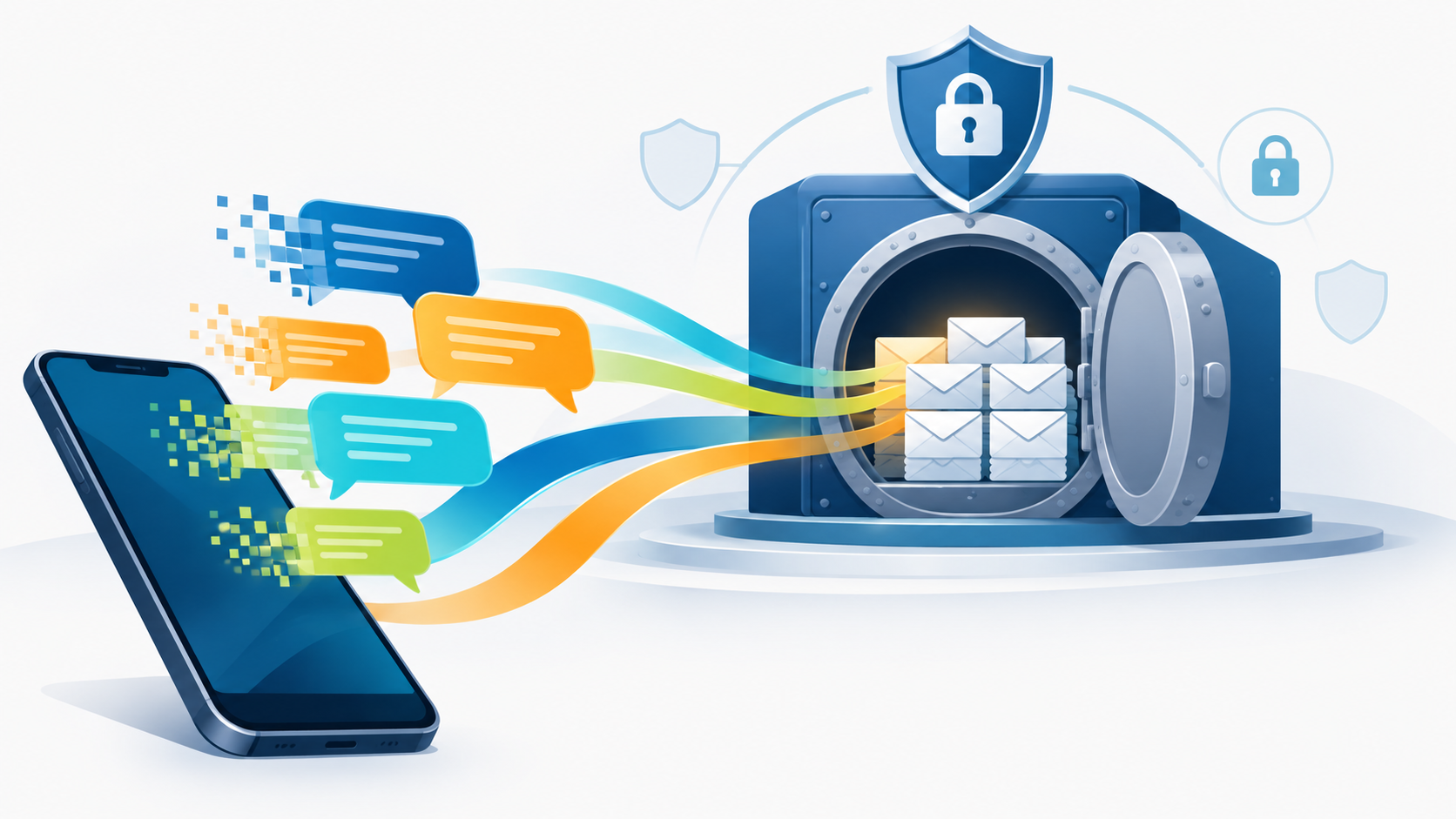
Outside financial services, the most prepared organizations are acting before enforcement reaches them. Companies in energy, health care, and manufacturing that operate under regulatory scrutiny want to be able to show they comply with preservation obligations and can produce mobile communications when asked. The goal is to capture messages from channels like WeChat, WhatsApp, and SMS and route them into the archive the same way email is handled. From there, they can be managed under the retention schedule or placed on legal hold when needed.
On enforcement, most DOJ and FTC activity so far has come as rulings or penalties within existing cases. In one recent example, a federal district court sanctioned a defendant whose communications were unavailable in response to an FTC subpoena. The defendant had kept using ephemeral messaging apps after learning the subpoena was coming. The case shows how a preservation failure can add legal liability for an organization that's already under scrutiny.
When a legal hold is issued, custodians often have their devices collected and imaged. Can a proactive program change that?
It can, and executives care about this a lot. Leaders need their phones for business and need to reach customers and partners on the channels those people prefer, which often means text or WhatsApp. They also don't want their devices taken and imaged every time an issue comes up. It's disruptive, and it raises legitimate concerns about personal content being collected.
When mobile messages are automatically copied into the corporate email or archive environment, they can be retained, searched, and placed on hold like any other record, without the employee doing anything or giving up their device. Device imaging becomes the exception rather than the rule. That especially helps high-risk custodians, such as executives and sales and operations staff, who might otherwise have their devices collected several times a year.
What does implementation look like in practice?
Take one health care organization as an example. It issued Apple devices to employees and allowed business use of iMessage, so it needed those messages in its archive alongside email and other records. The work had several phases:
- Selection: running a request for proposals among archiving providers and evaluating which solution fit the organization's environment
- Procurement and deployment: contracting with the selected vendor and overseeing the software implementation
- Configuration and testing: configuring the environment and running quality assurance to confirm the archive worked as designed
- Process alignment: updating e-discovery playbooks and procedures so captured mobile data could be placed on legal hold within Microsoft 365
The result was an integrated, defensible preservation program for mobile communications that prepared the organization to respond to a government investigation or litigation.
The Takeaway for Information Professionals
It's tempting to put off mobile preservation until a subpoena or hold notice forces the issue. Waiting raises the risk of sanctions, regulatory fines, and further compliance problems. Enforcement trends and agency guidance point to modern communications channels staying a regulatory focus.
The practical steps for information governance leaders are:
- Inventory your channels. Find out which messaging platforms employees actually use for business, not just the ones policy allows.
- Bring mobile into the retention schedule. Treat business messages as records, governed by the same rules as email.
- Capture at the source. Route messages into your archive automatically so preservation doesn't rely on individual employees.
- Align legal hold processes. Make sure e-discovery playbooks cover mobile data and that holds can be applied without collecting devices.
- Revisit policies on ephemeral messaging. Decide where disappearing messages are allowed for business use, if anywhere, and document that decision.
Organizations that make mobile communications part of their broader information governance program reduce their risk and are better prepared for whatever discovery obligations come next.
About John Goff
John Goff, Managing Director at FTI Technology, is an expert in helping corporations develop and implement a wide range of information governance and e-discovery programs to reduce the costs and risks of enterprise data. Mr. Goff supports clients with identifying sensitive information for remediation, conducting vendor risk assessments, bringing e-discovery operations in-house and developing and implementing cyber risk response plans. His experience extends across numerous industries, with particular expertise helping dozens of financial services institutions reduce risk related to regulatory enforcement actions, off-channel communications and data over-retention. Mr. Goff specializes in complex, large-scale data migrations and defensible deletion initiatives, with a focus on improving regulatory compliance, litigation readiness and artificial intelligence governance. His work includes updating records management and legal hold programs and operationalizing e-discovery playbooks for improved cross-department transparency and billing. With a background in IT, he is also adept at collaborating across IT, legal and information security teams to produce practical results.