



Balancing AI Innovation with Data Privacy: A Strategic Approach
Privacy | Intelligent Information Management (IIM) | Artificial Intelligence (AI)
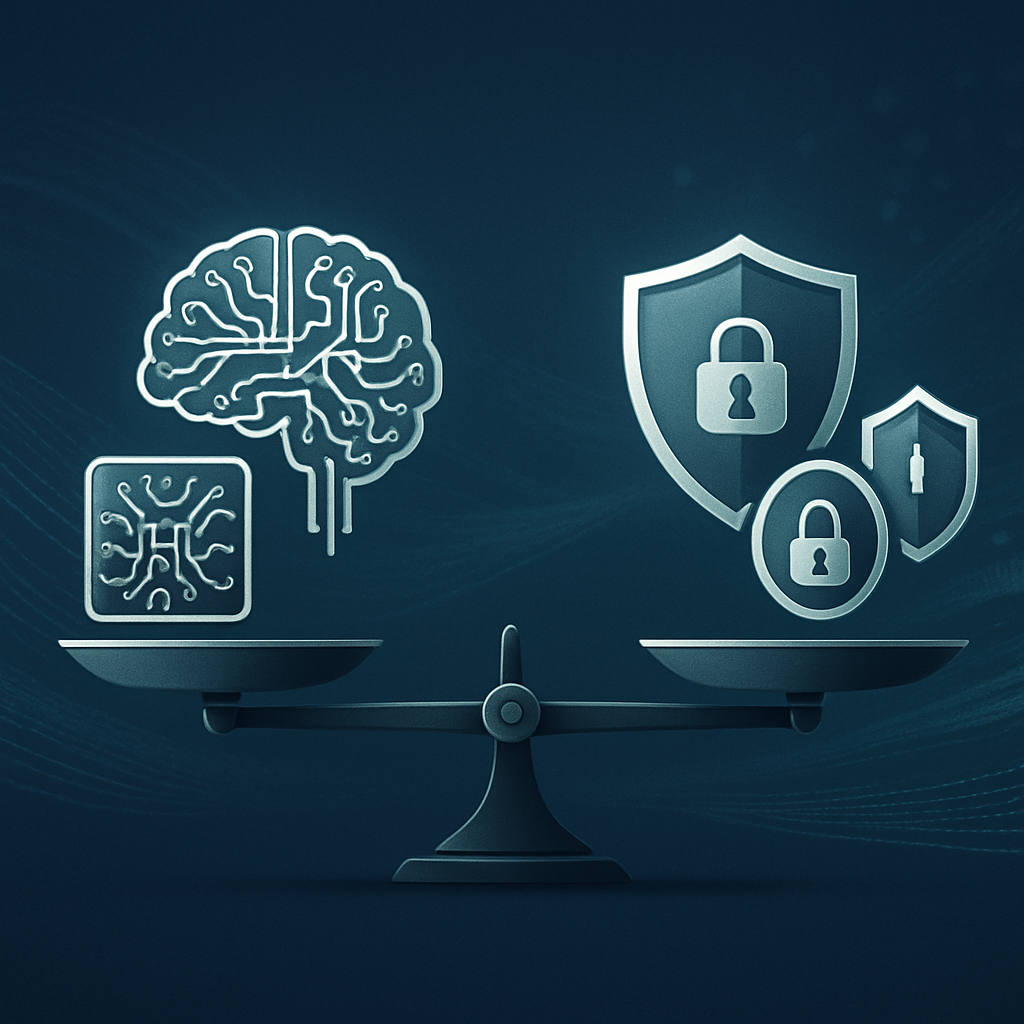
Organizations today face a critical balancing act: leveraging the transformative power of AI while protecting individual privacy and maintaining regulatory compliance. This challenge touches the heart of information governance, and therefore, requires thoughtful consideration.
Evaluating Data Lifecycles and Value
When approaching an AI implementation, organizations should begin by assessing the time value of different data elements. These are:
- Identify critical data points: Determine which data elements are necessary for your specific analytical purposes over the long-term, and which are not necessary?
- Consider “data shelf life”: Analyze which data elements have value and usefulness over their lifespan
- Evaluate risk vs. value over time: Identify the point which the value of retaining certain information no longer exceed the risk of keeping it
For example, you might need transaction information with personally identifiable details during an accounting year. After that period, you may only need to know what products were purchased in which sales region for trend analysis — not who purchased them.
Data Minimization Strategies
Data minimization is about collecting, processing, and storing only the minimum amount of personal data necessary for a specific purpose. The principle of data minimization should guide your AI implementation strategy:
Anonymization Techniques
Various approaches can help you maintain analytical capabilities while protecting privacy:
- Data scrubbing: remove identifying elements while preserving valuable trend and historical information
- Generalization: Replace specific data (like exact address) with broader data (like zip code, city, or region)
- Aggregation: Use summary statistics rather than individual data points
Selective Data Retention
Consider whether you truly need all the data you're collecting:
- Do you need credit card information for five years, or just sales trend information?
- Can you achieve your analytical goals with less sensitive data?
- Is storing personal identifying information adding value to your specific use case?
Applying Privacy-by-Design Principles
When implementing AI systems, consider adopting privacy principles similar to those in the General Data Protection Regulation (GDPR), California Consumer Protection Act (CCPA), or similar principles in the Personal Information Protection and Electronic Documents Act (PIPEDA). This means:
- Treating AI applications as data processors with appropriate controls
- Questioning what data is truly needed for each specific AI training use case
- Designing appropriate safeguards based on sensitivity and risk
This approach is particularly relevant for internal analysis. For example, if you are using small language models for HR analysis or succession planning, you likely don't need employees' names and addresses — age, demographics, and regional information might suffice.
Understanding Data Quality Thresholds
The quality threshold required for your data depends on its intended use. For example, when you're selling addresses to an organization for bulk mailing, the difference between having one wrong address per 10,000 versus one wrong address per 1 million has significant implications. When mailing to a million addresses, that error rate difference could be a substantial cost to the organization that is sending the mail. Similarly, when feeding data into AI systems, understanding your quality requirements and error tolerance is critical to both effectiveness and privacy protection.
Balancing AI and Privacy
The key to balancing AI innovation with privacy protection lies in:
- Understanding your analytical goals: Be clear about what insights you're seeking
- Identifying minimum necessary data: Determine what data is truly required
- Implementing appropriate safeguards: Apply controls based on a privacy impact analysis that considers both data sensitivity and associated risk
- Regularly reassessing data value: Evaluate whether retained data continues to serve a business purpose
Concluding Thoughts: A Strategic Path Forward
By taking this strategic approach, you can harness AI's capabilities while respecting privacy concerns and regulatory requirements — ultimately building more sustainable, responsible AI systems, while delivering valuable business outcomes and results.
This blog post is based on an original AIIM OnAir podcast. When recording podcasts, AIIM uses AI-enabled transcription in Zoom. We then use that transcription as part of a prompt with Claude Pro, Anthropic’s AI assistant. AIIM staff (aka humans) then edit the output from Claude for accuracy, completeness, and tone. In this way, we use AI to increase the accessibility of our podcast and extend the value of great content.
About Amitabh Srivastav, PMP, CIP, IGP, AIIM Fellow & Ambassador
Amitabh Srivastav is an expert in information governance and digital transformation who brings over 25 years of experience to the table. As the Chief Data Officer and VP of Compliance & Risk Management at HELUX.ai, Amitabh helps organizations navigate the complex world of digital transformation, Microsoft solutions, and compliance. His expertise spans governance, automation, and risk management, and he's a respected voice in the field - regularly presenting at major industry conferences and contributing to ISO standards. He's an AIIM Fellow and holds multiple advanced degrees in computer science and project management, along with professional certifications including PMP, CIP, and IGP. Amitabh is also deeply involved in shaping the future of information management through his work on various boards and committees, including AIIM True North Chapter and the ARMA International Education Foundation. He is also an AIIM Ambassador.